Centralized hyperscale
- One campus, continent‑scale backhaul
- Traffic travels half the country (or further)
- High latency, high energy waste
- Public internet exposure for many paths
- AI feels remote — rented from afar
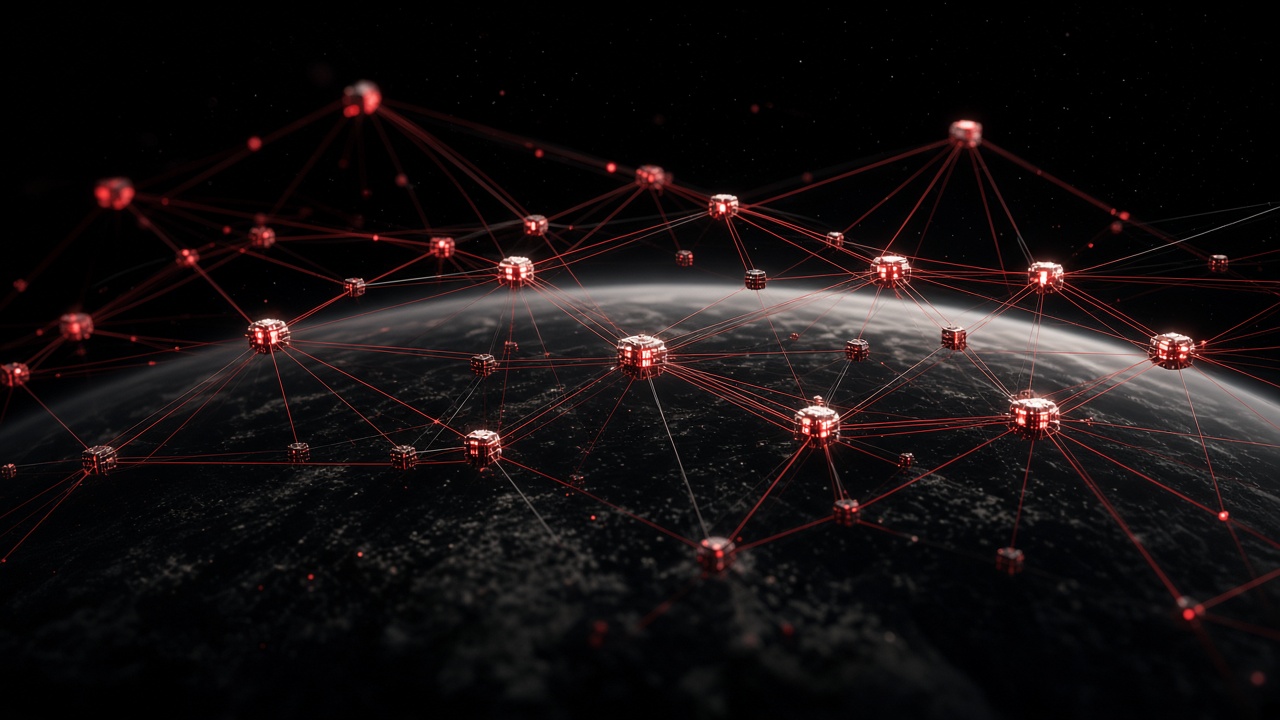
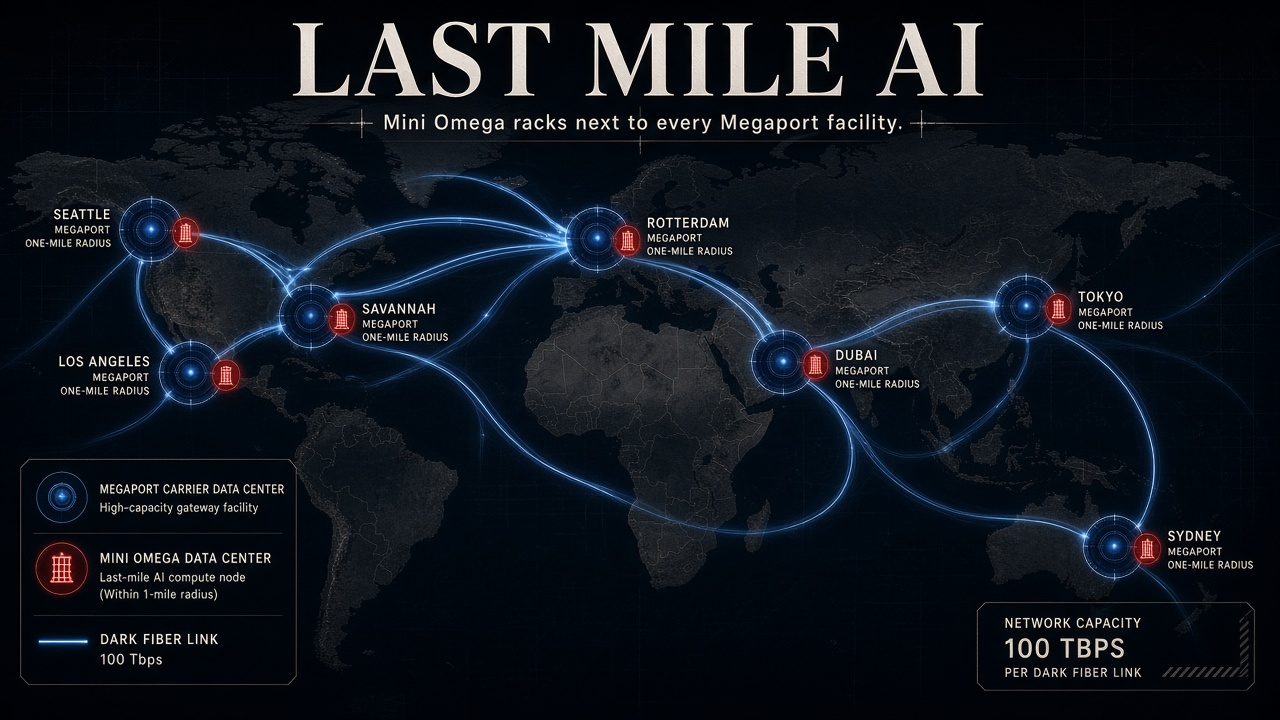
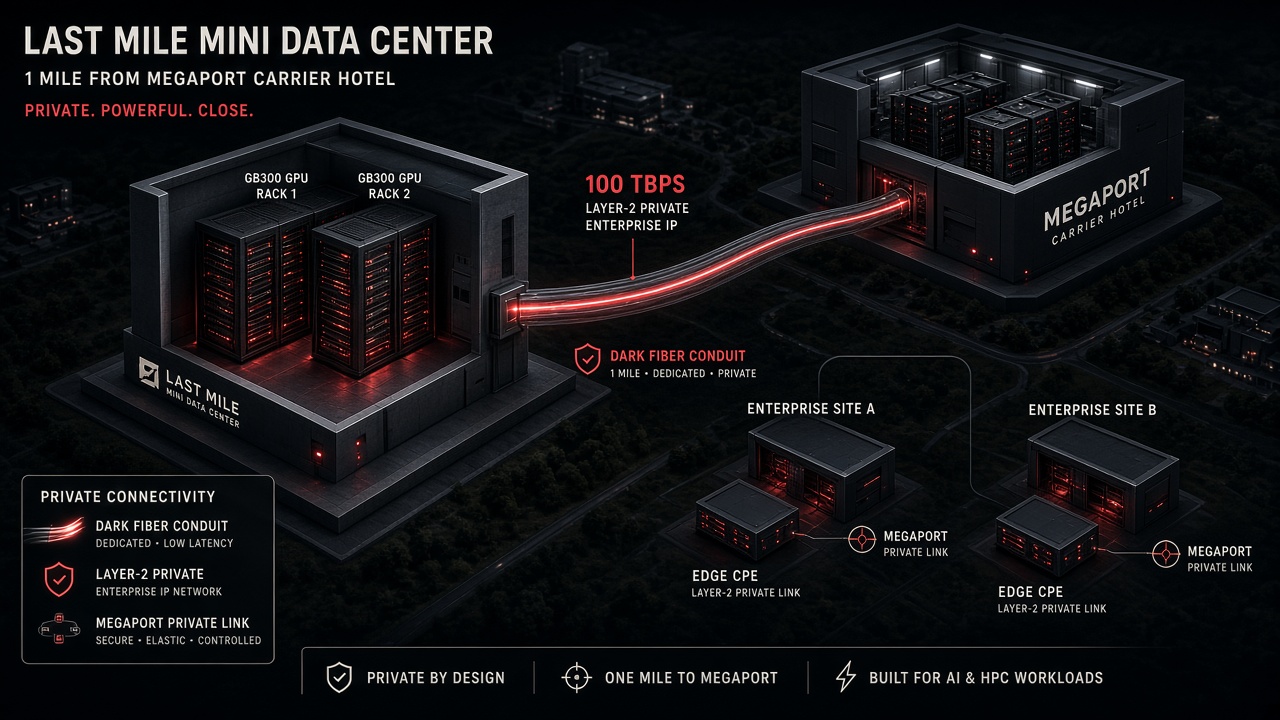
Wherever Megaport has a facility, we put a mini Omega data center within the last mile of it — GPUs, CPUs, our own models, our own apps. One hundred terabits per second of dark fiber to the carrier meet. Layer‑2 private enterprise IP to every client. AI that lives in your community, not halfway across the country.
Every hyperscale model you use sits in a handful of giant campuses. Every question you ask, every call SARAH takes, every document you send, travels to that campus and back — across a state, across a country, sometimes across an ocean. That trip costs three things you never get back: time, energy, and exposure to the public internet.
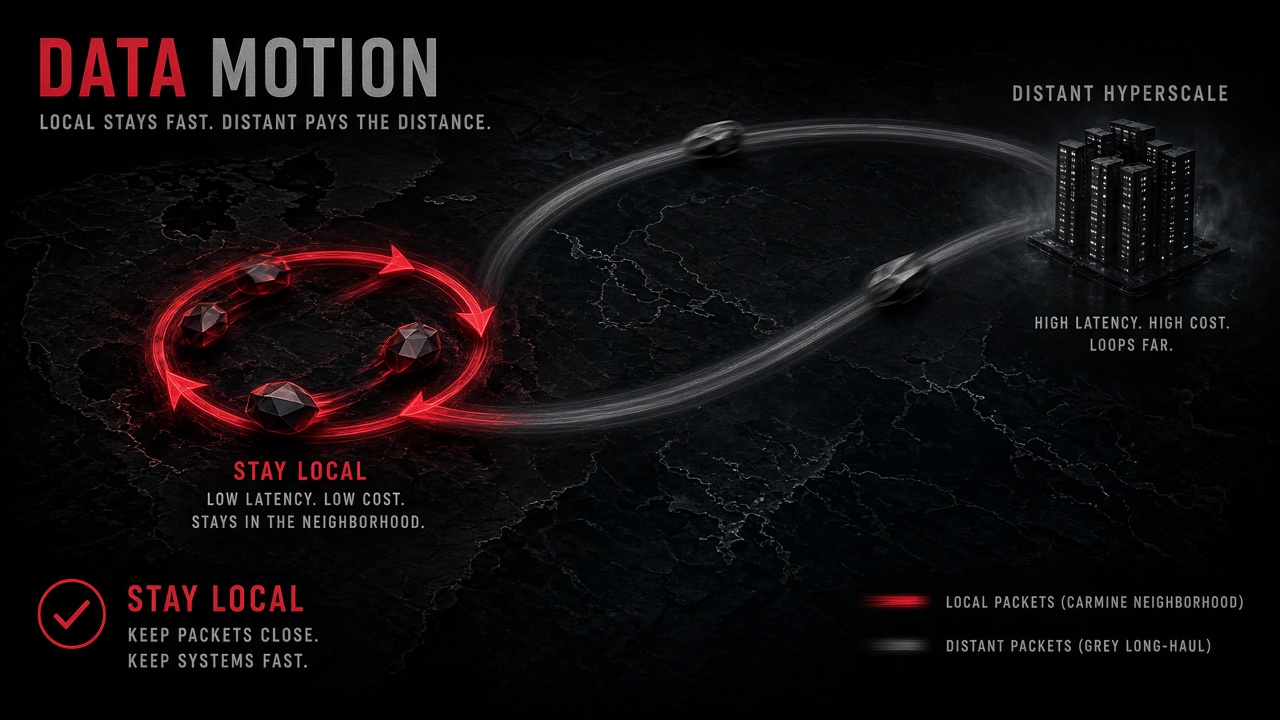
A voice turn that should feel instant carries hundreds of milliseconds of pure distance. A conversation over a phone line becomes a relay race between your city and a campus you will never visit. Multiply that by every user, every day, and the “cloud” is quietly the longest commute in your business.
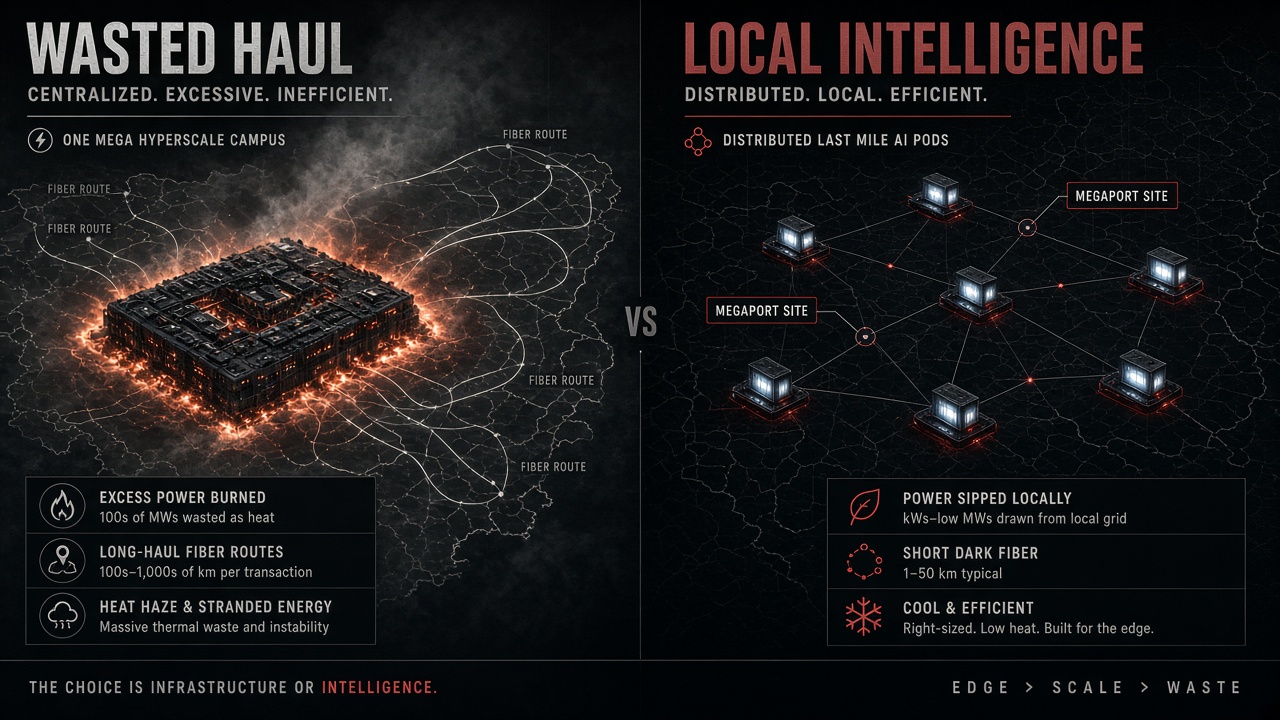
Hyperscale concentrates compute where land and power are cheapest for the operator — and pushes the distance, the latency, and the network bill onto the people who actually use it. The bigger the campus, the further away it is from the community it serves.
We decided to build the opposite.
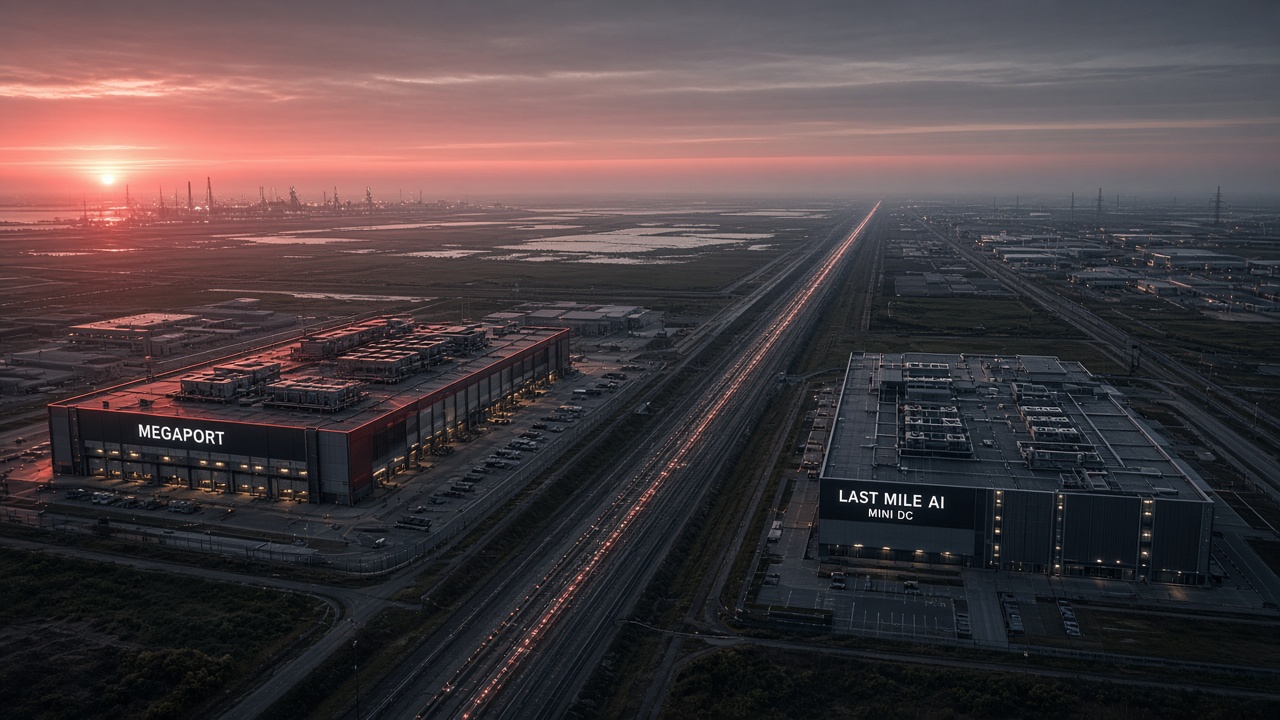
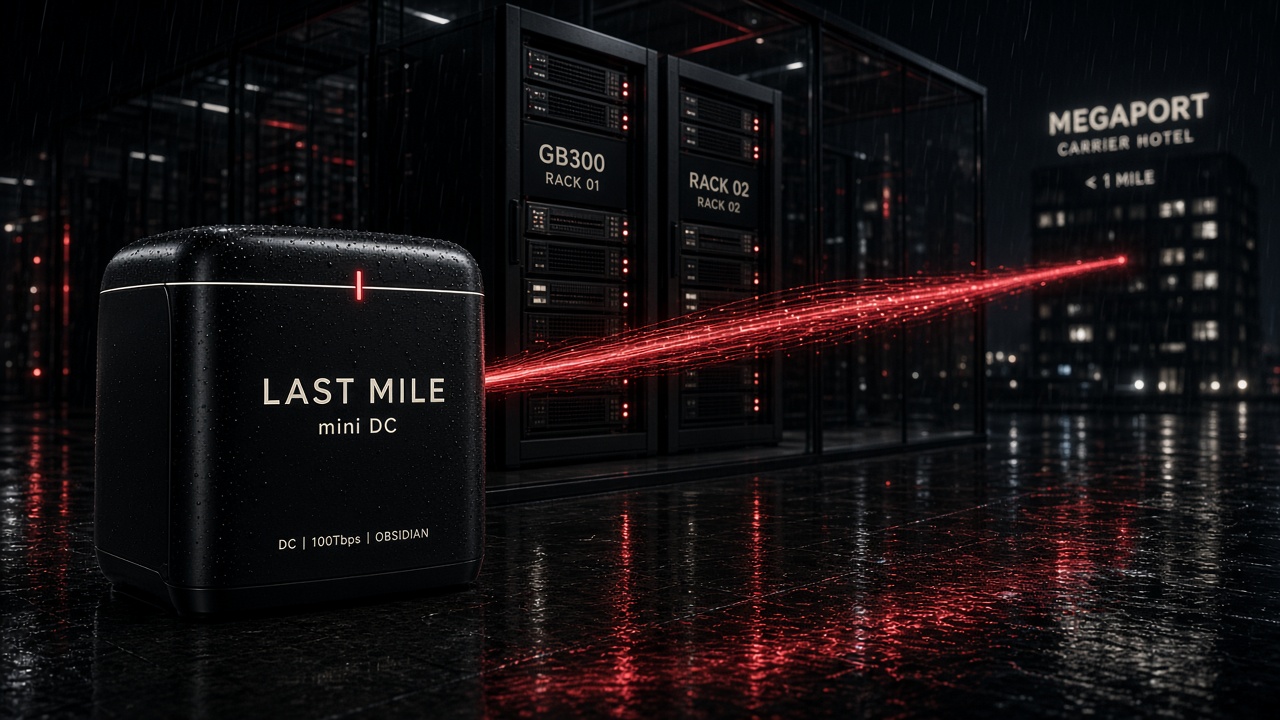
Megaport already runs a global network of data centers where the carriers meet. Our idea is simple and against the grain: for every Megaport facility, a mini Omega data center within the last‑mile radius. If they are in a city, we are next door. If they have a thousand facilities, we build a thousand mini data centers. One to one.
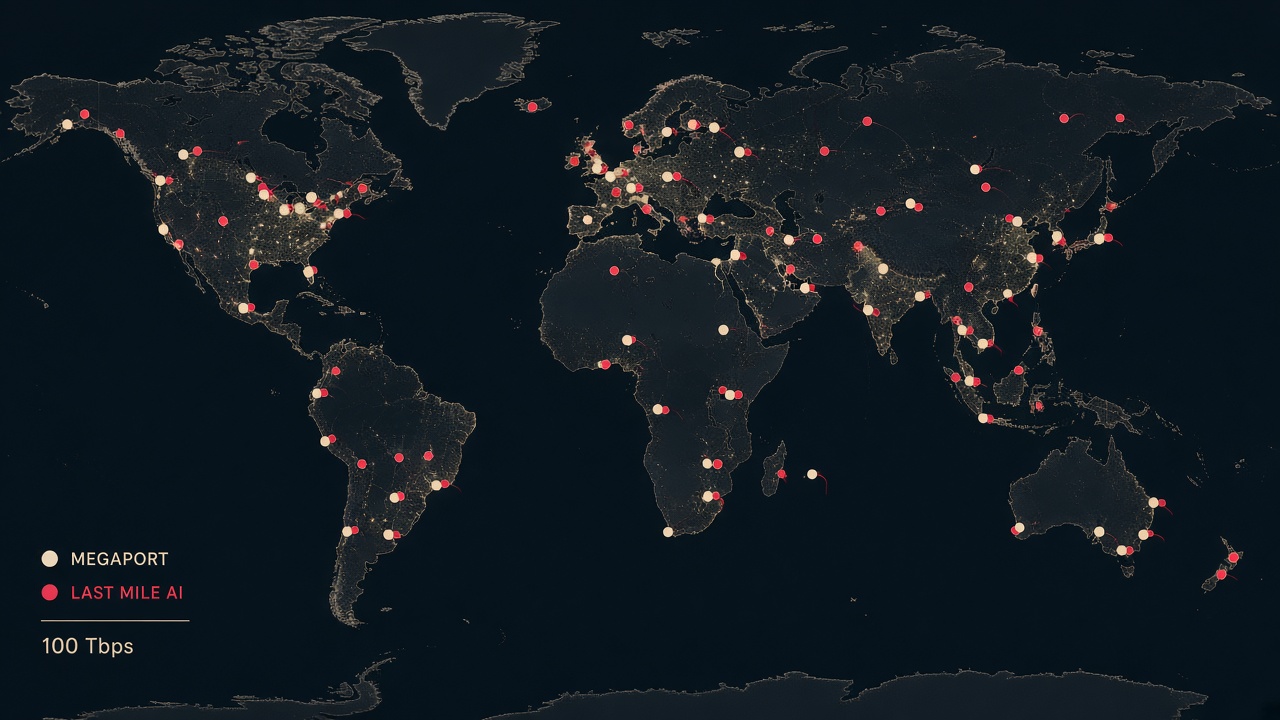
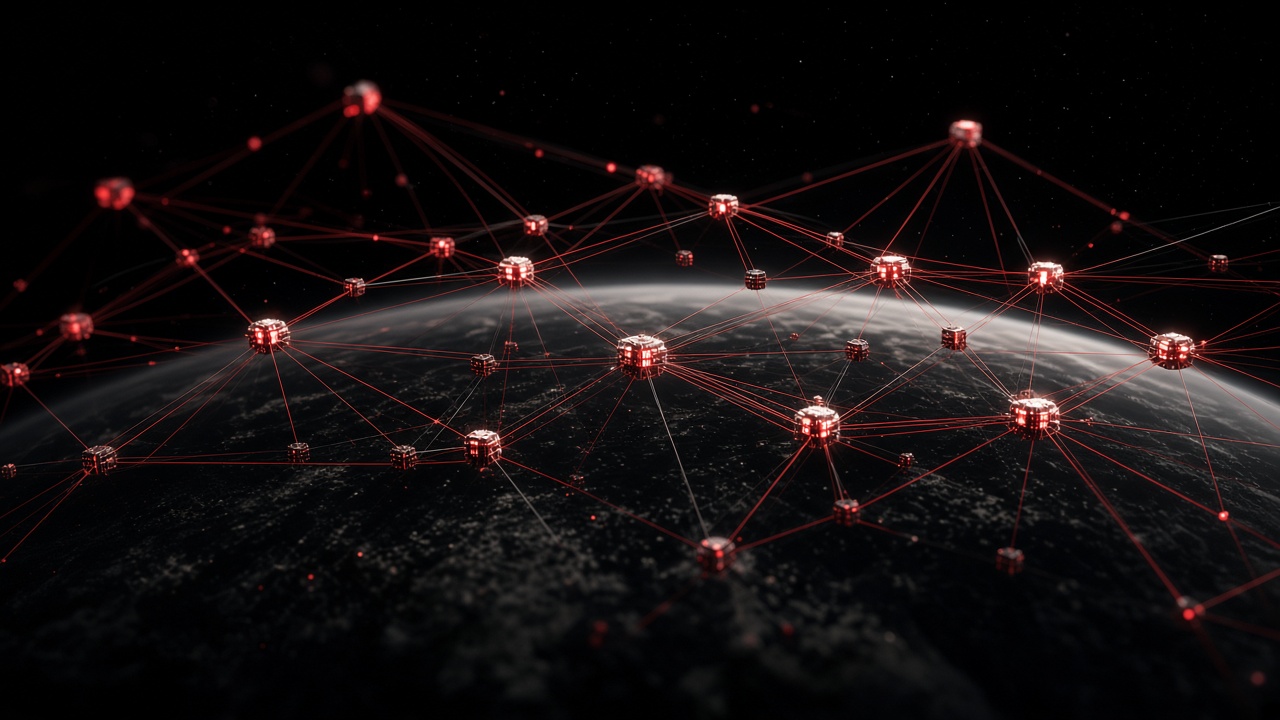
We do not pick three regions and ask the world to come to us. We follow the carrier meets — all over the United States, all over the world — and place Omega hyperscale within a mile of each one. Domestic traffic stays domestic. Local traffic stays local.
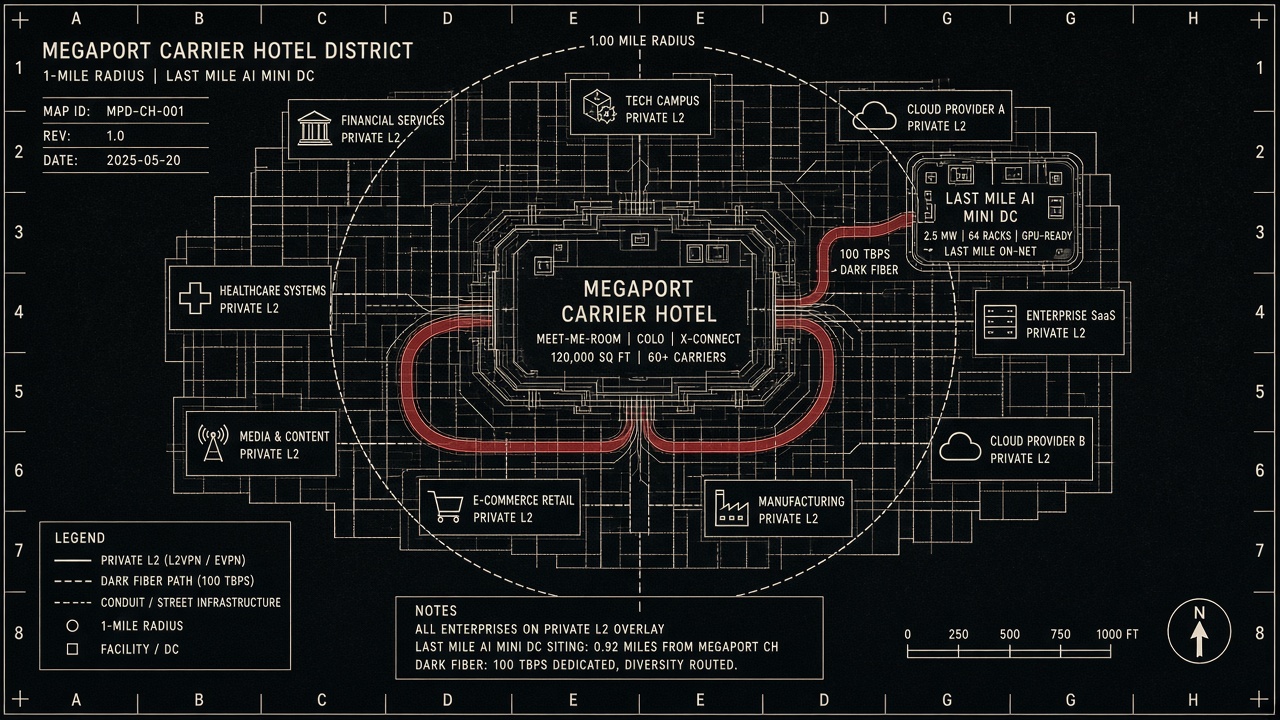
Whoever sits inside that radius — an enterprise, a hospital, a school, a call center, a city — gets the full 100 terabits per second of GPU speed as if the model were in their own building. It is not a remote service they rent. It is part of the community, close to home.
“So whoever is within that radius, within close proximity of that data center, is going to have full access to one hundred terabits per second of GPU speed.”
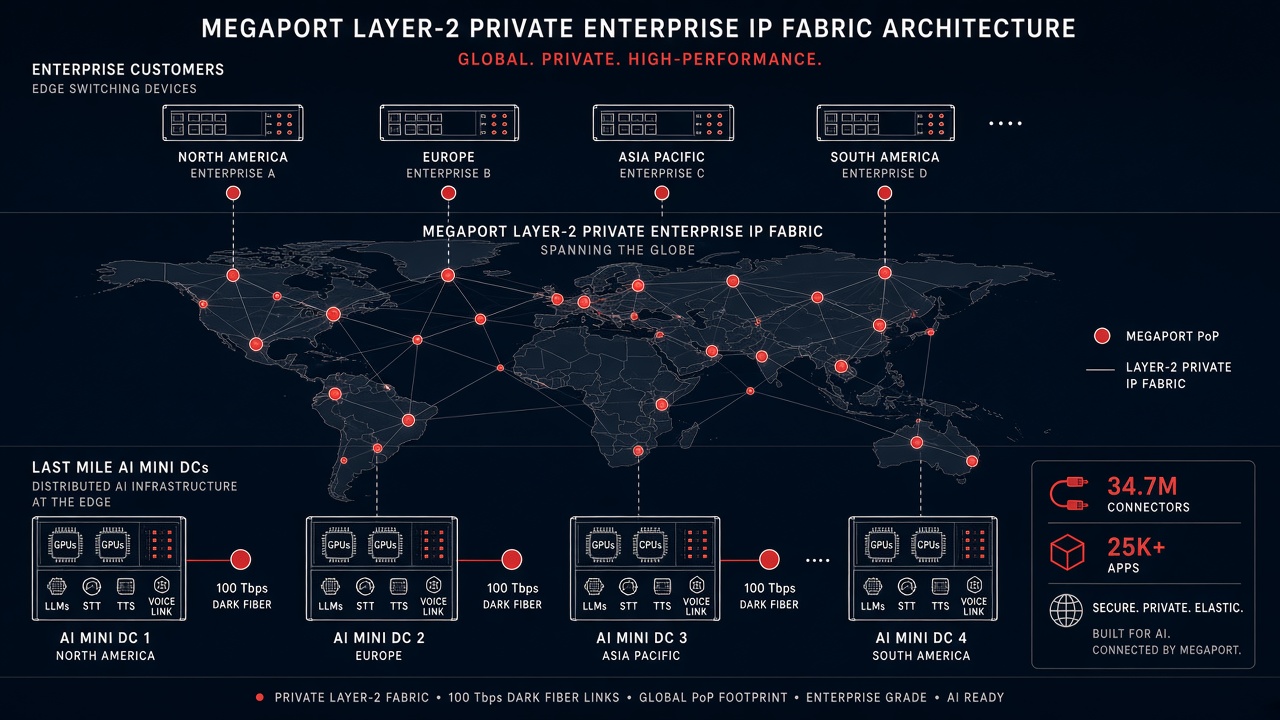
The founding brief · September 2026The mini Omega is joined to the Megaport facility by dark fiber running at 100 terabits per second — enough bandwidth to carry any amount of traffic the community can generate. Clients never touch the public internet to reach us: they connect over Megaport’s Layer‑2 private enterprise IP network, the same way they already reach their carriers.
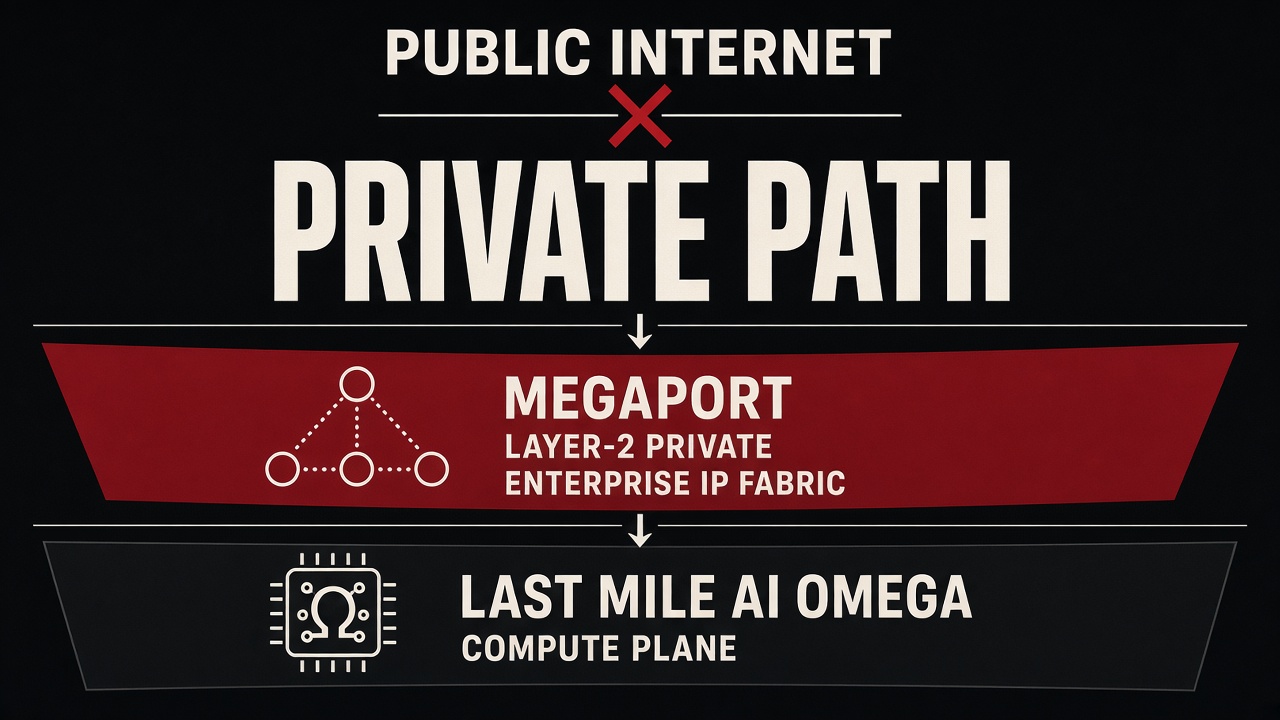
A client’s business never leaves the private fabric. Their site connects to Megaport on Layer‑2. Megaport connects to our racks on dark fiber. The models answer from a mile away. There is no hop through the open internet to expose, intercept, or throttle.
A small edge device does the switching and routing. Nothing heavy lives here.
The enterprise rides the private network it already trusts — no public internet.
Where the carriers converge. Our dark fiber begins here.
Within the last mile. GPUs, CPUs, our models and apps answer from next door.
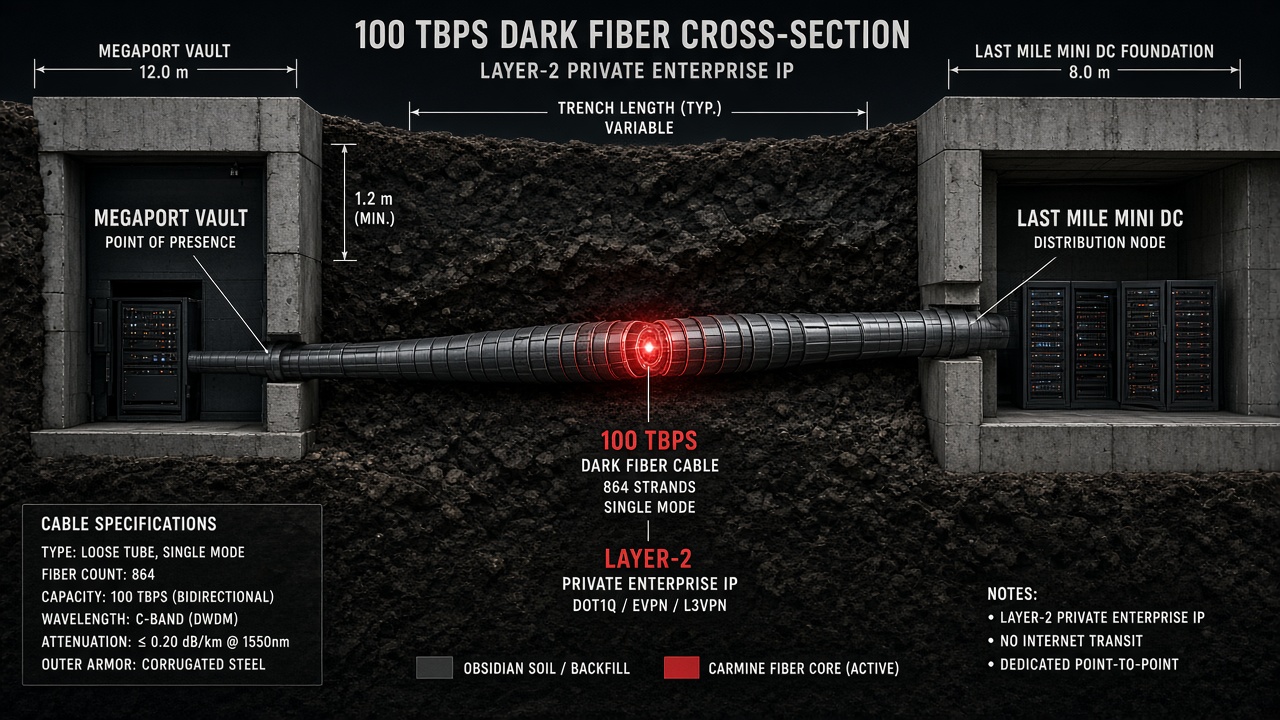
One hundred terabits per second to a site that serves a single metro radius means the pipe is never the bottleneck. Voice, video, documents, screen shares, model calls, connector traffic — all of it, for everyone in the radius, with headroom to spare.
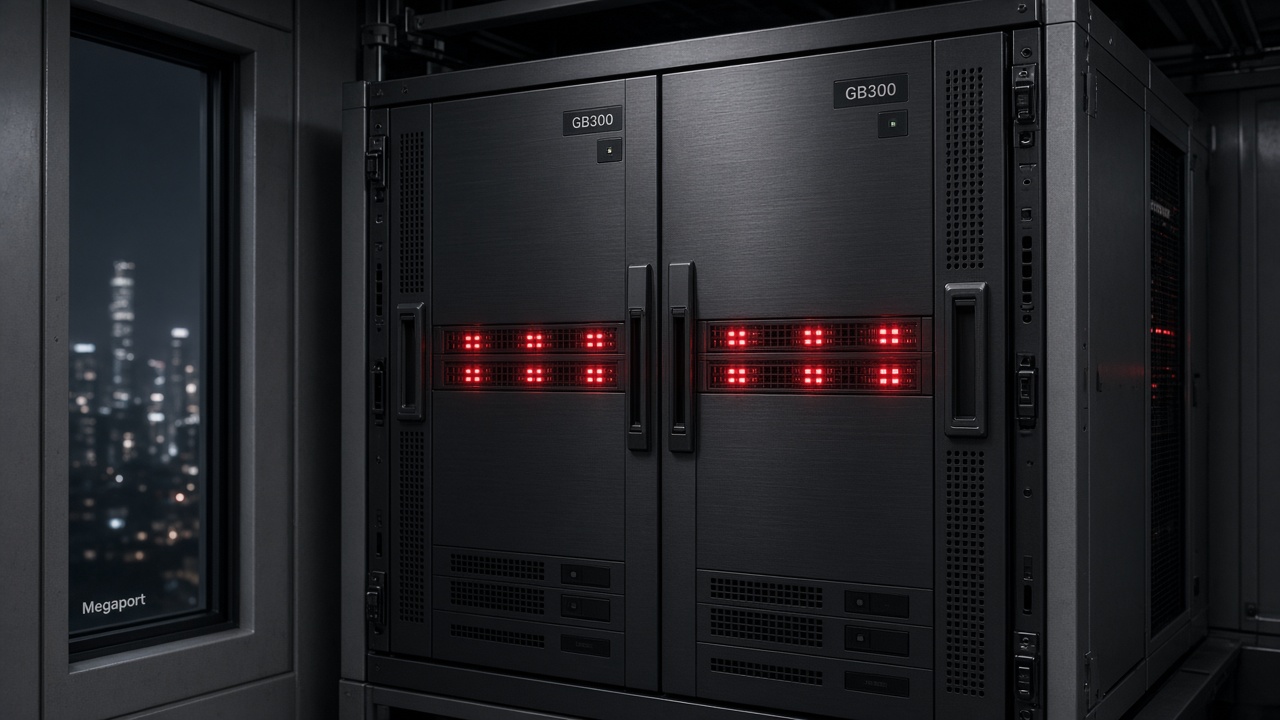
Each site opens with a minimum of two GB300 racks — Omega hyperscale in miniature — with ribbon racks to follow as the silicon arrives. Alongside the GPUs sit the CPUs, the storage, and the servers that host everything else we run.
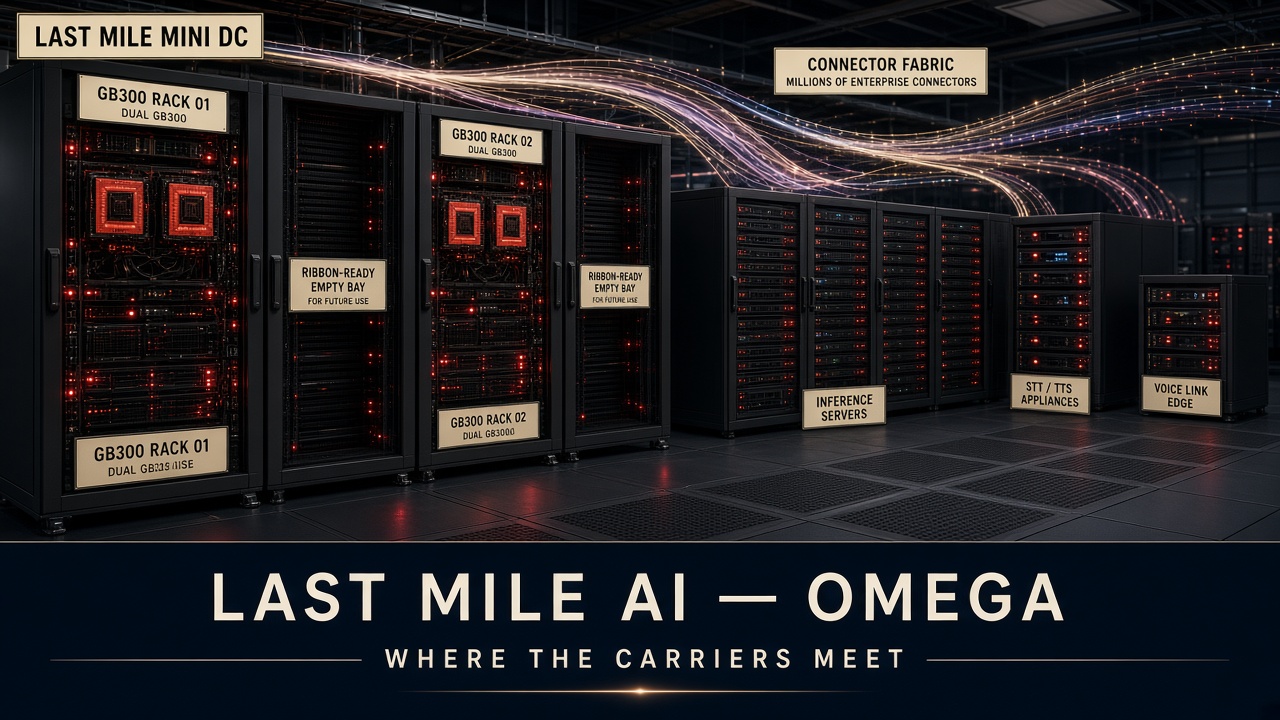
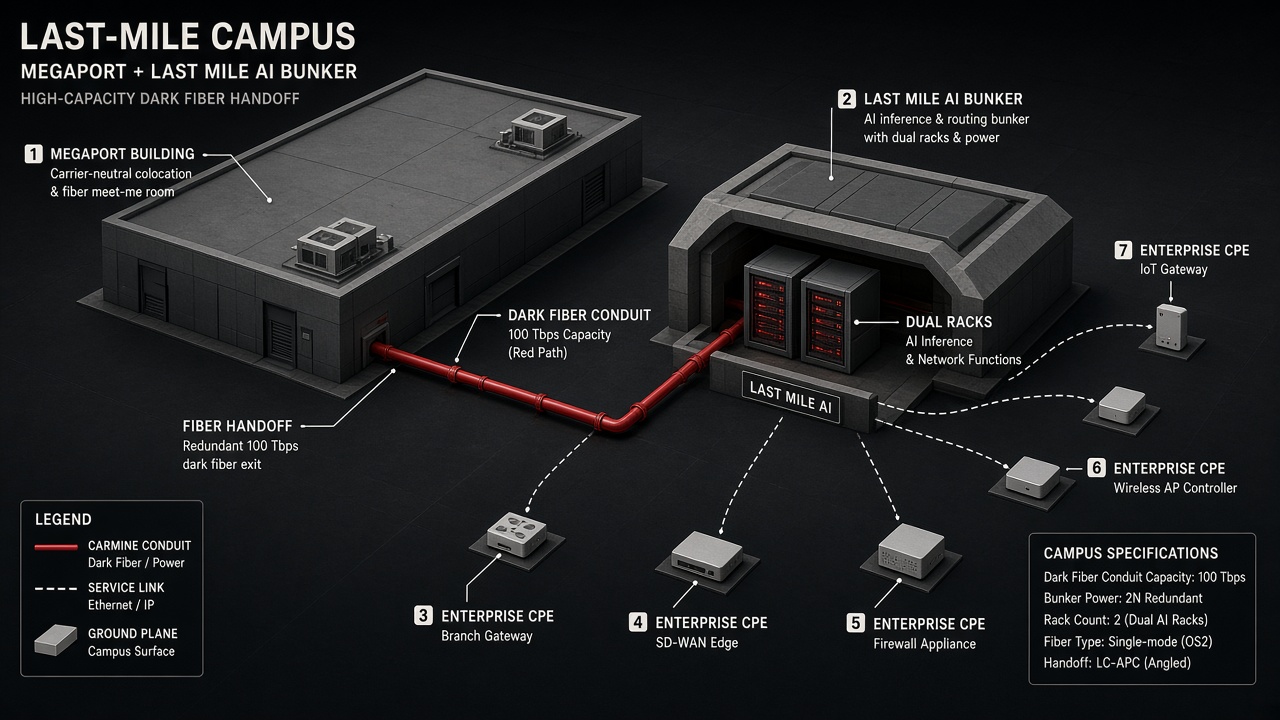
This is not a colocation cage for someone else’s software. The mini Omega hosts our own large language models, our own speech‑to‑text and text‑to‑speech, and every application we have built on top of them — so the whole experience is domestic, private, and a mile away.
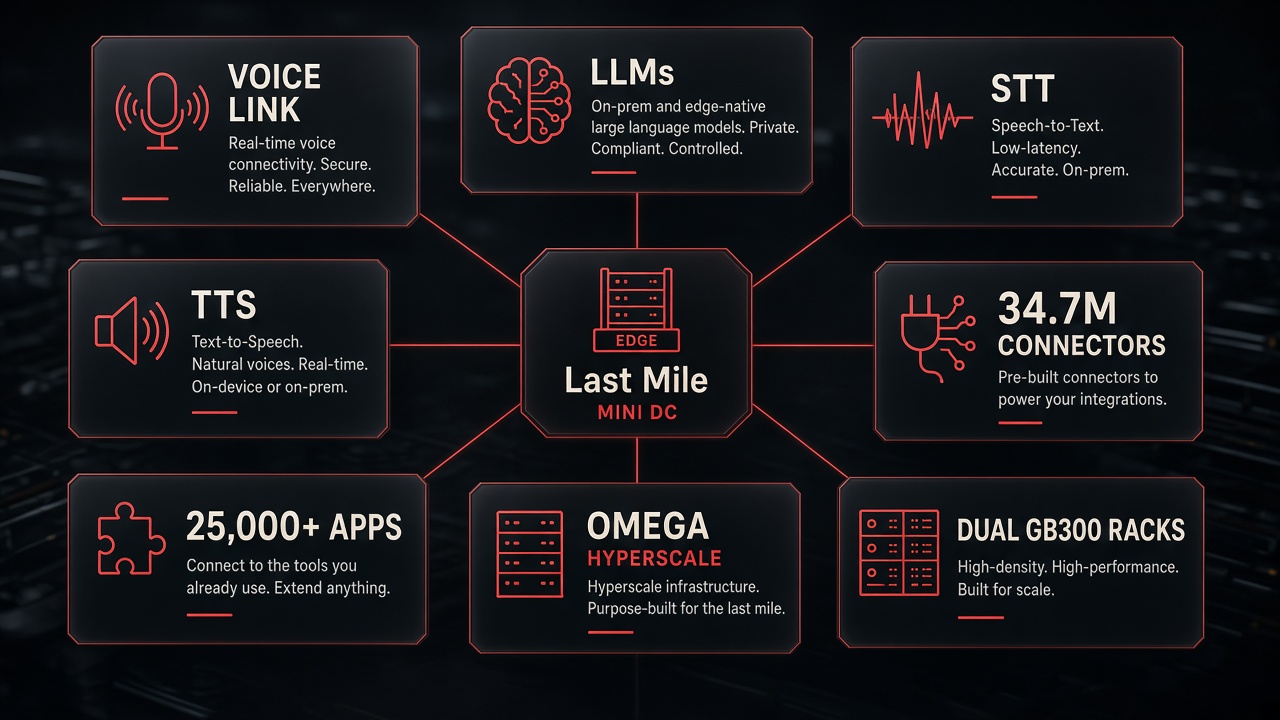
What lands in one mini Omega lands in all of them. The models, the voices, the phone system, the enterprise connectors, the industry apps — a complete platform, replicated site by site, so a client in one metro gets exactly what a client in another metro gets.
Large language models we run ourselves, on GPUs a mile from the people using them — never rented from a distant campus.
Streaming speech recognition and natural voices, hosted locally so a conversation feels like a conversation.
A complete telephone system behind one weblink, answered by SARAH — local inference path, community latency.
The enterprise connectors, living beside the carriers instead of being hauled across a continent for every call.
Applications we developed ourselves, hosted on the same last‑mile fabric as the models that power them.
Everything we have built on top — the conference rooms, the agent consoles, the revenue engine — runs where the client is.
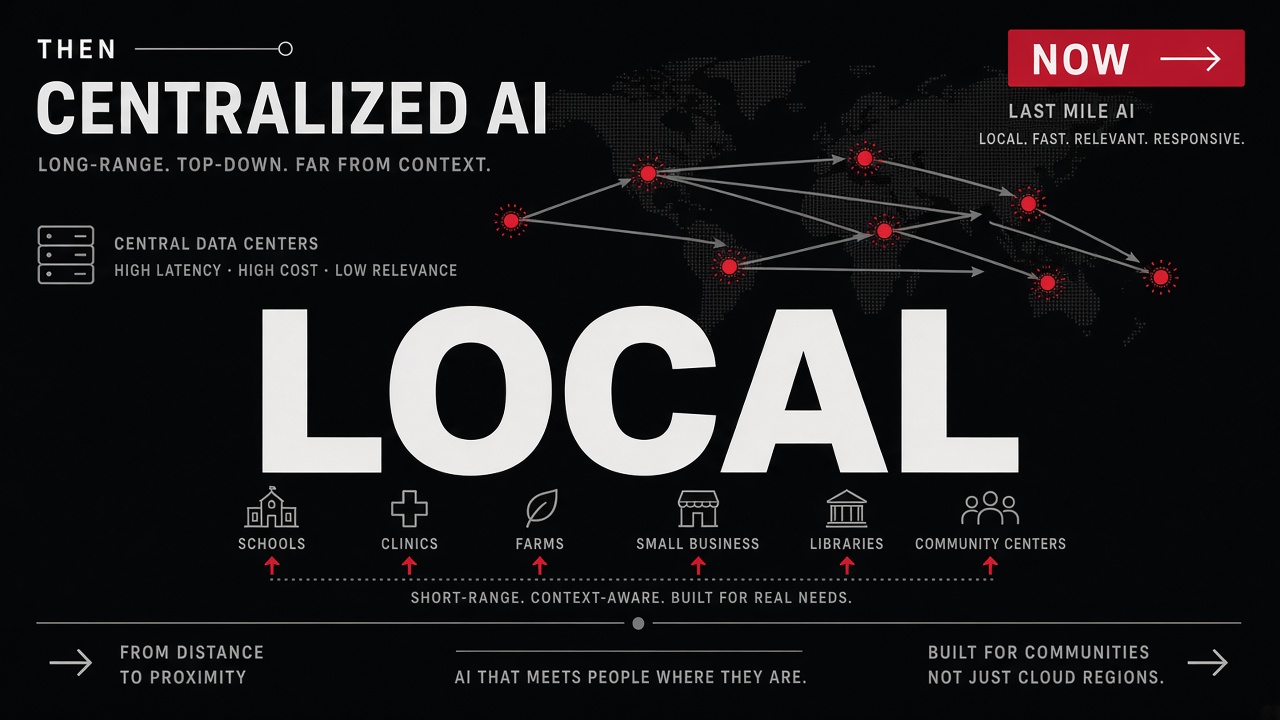
The person using the model should feel like they are using a local AI — because they are. It answers from their metro. Their data stays in their country. Their latency is the latency of a mile, not a continent. That is the whole point.
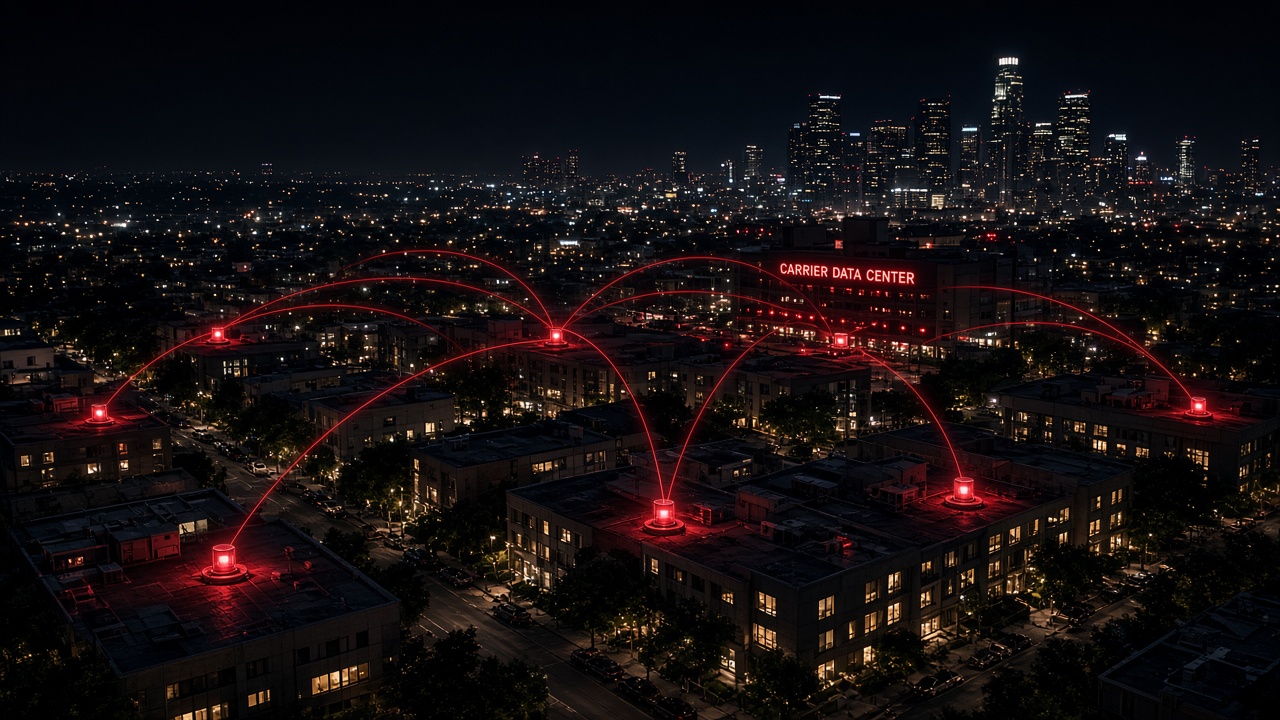
An enterprise on Megaport Layer‑2, a hospital, a university, a city hall, a contact center — anyone inside the last‑mile radius gets full local GPU speed. No tiering by distance, no “edge lite”. The full stack, next door.
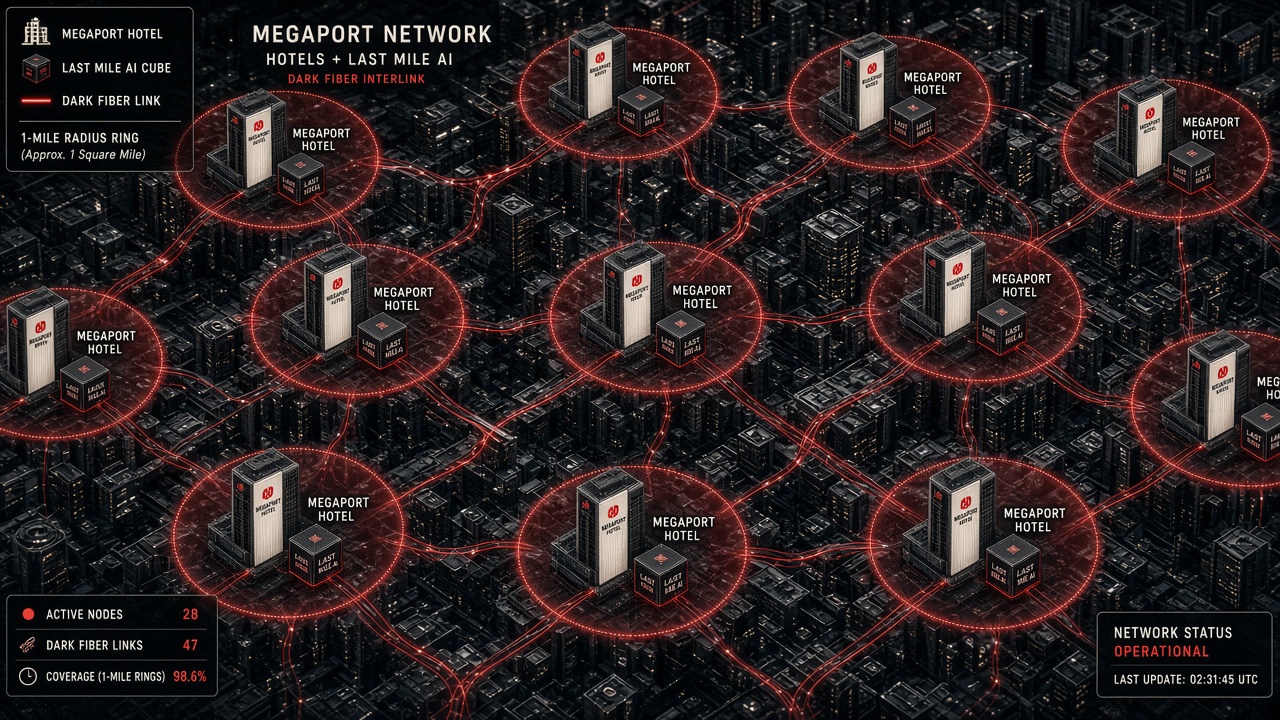
Because the pattern follows Megaport, it scales the way a network scales — one pair at a time, all over the United States, then all over the world. Every new pair is a new community with its own local AI.
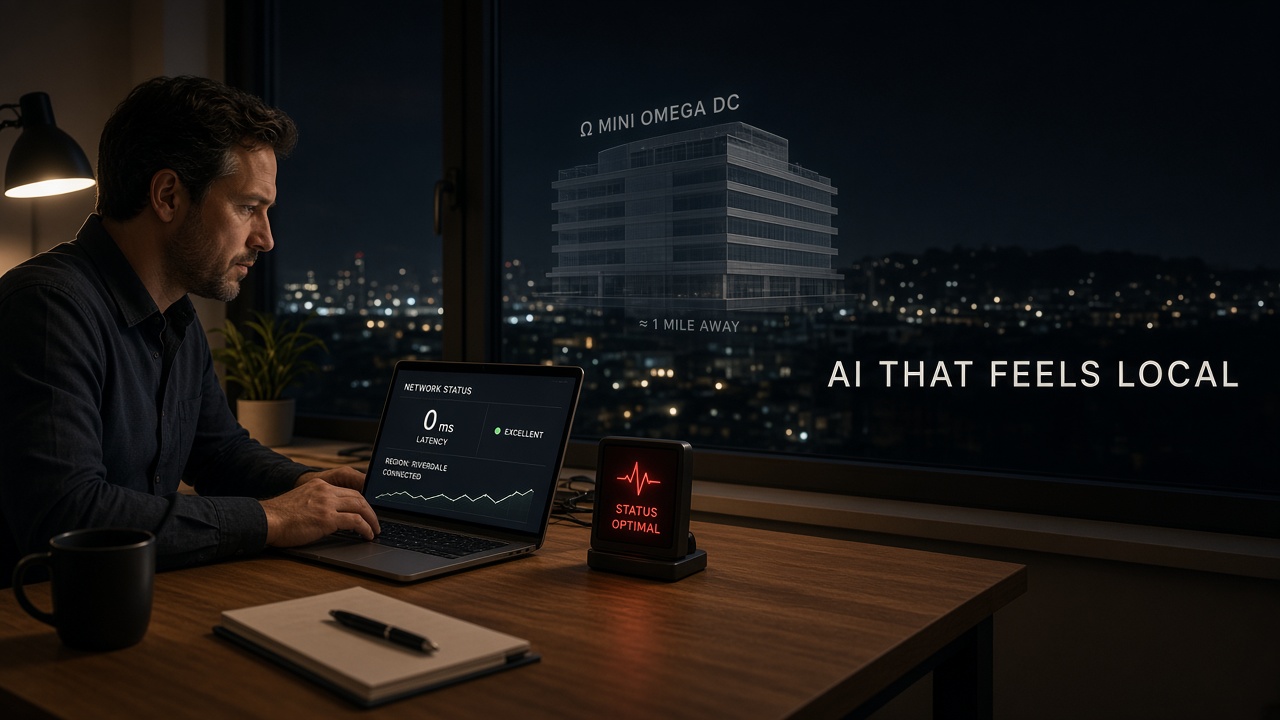
“It’s going to be like they’re using a local AI — because it’s actually part of the community.”
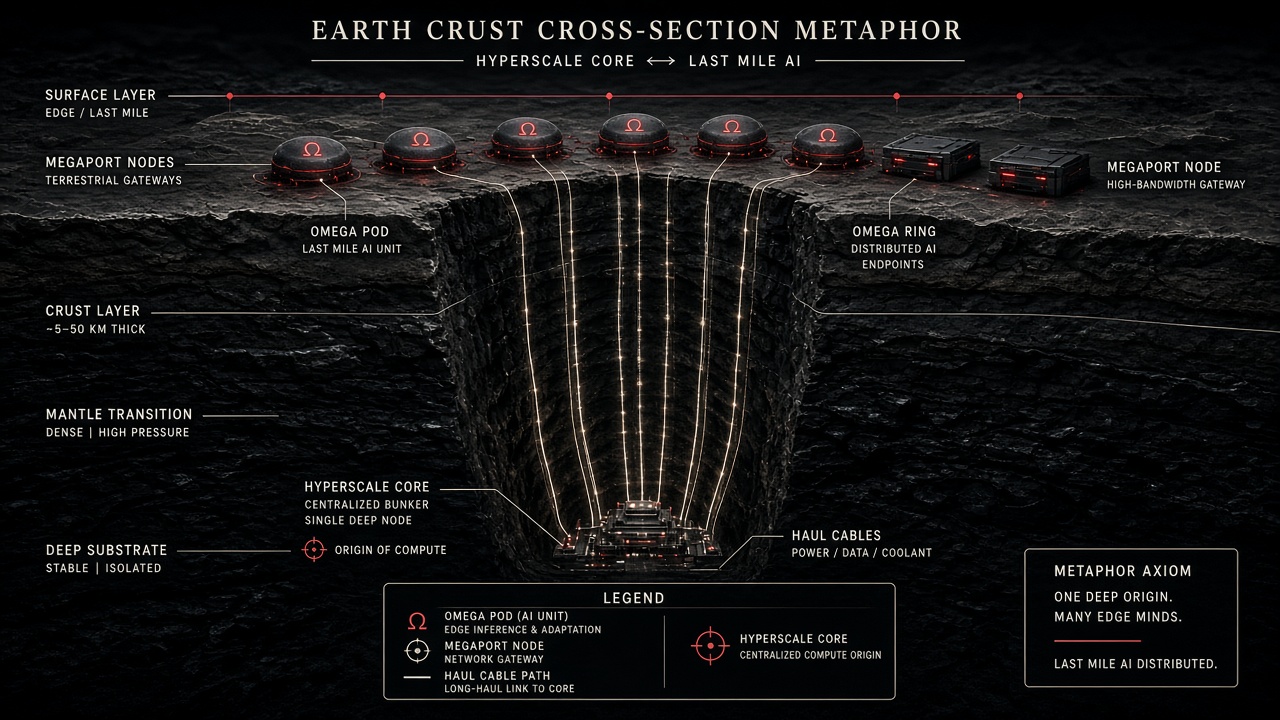
Why we build it this wayTwo ways to deliver the same model. One sends your traffic halfway around the country to a campus that wastes energy and bandwidth on the trip. The other puts the model where the carriers already meet — a mile from you.
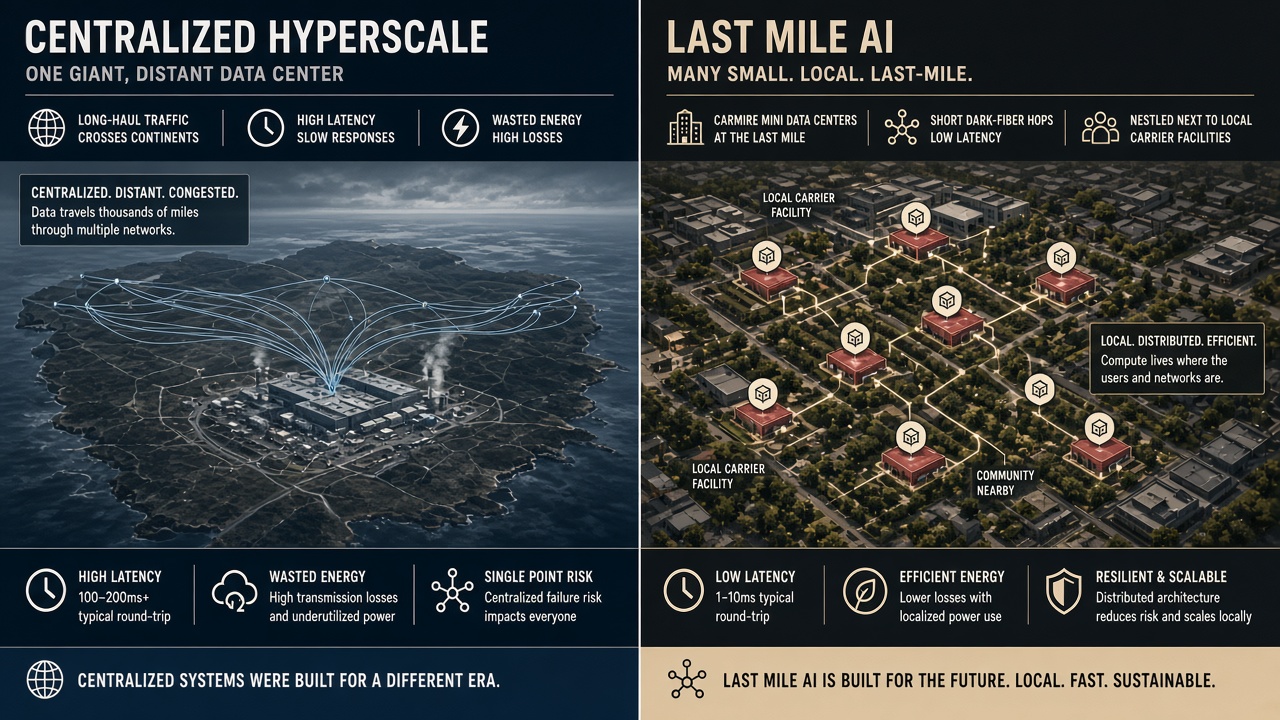
| Dimension | Centralized hyperscale | Last Mile AI |
|---|---|---|
| Where the model runs | One distant campus, chosen for the operator’s power bill | A mini Omega within a mile of the carrier meet |
| Distance per request | Across a state, a country, sometimes an ocean | Across a metro |
| Latency | Hundreds of milliseconds of pure distance | The latency of a mile |
| Energy | Burned hauling bits back and forth | Spent thinking, not travelling |
| Network path | Public internet on many hops | Layer‑2 private enterprise IP + dark fiber, end to end |
| Bandwidth | Shared backbone, contended | 100 Tbps dedicated to one radius |
| Data residency | Wherever the campus happens to be | In your metro, in your country |
| Whose software | Rented models, rented stack | Our own LLMs, speech, Voice Link, connectors, apps |
| How it feels | Remote — a service from afar | Local — part of the community |

Hyperscale optimises for the operator. Last Mile AI optimises for the person on the other end of the call. That is why we pair with Megaport instead of competing with it, why we lay dark fiber instead of leasing internet, and why the whole stack is ours to place wherever the community is.
The picture tells it faster than the words: Omega, within the last mile of every Megaport.